AEO for ecommerce matters to a small store owner for one reason: more shoppers now ask an AI assistant what to buy before they ever see a list of shops.
Book a free SEO strategy session →
The question is whether paying someone to work on it is worth it for a store your size, or whether you should learn it and do it yourself.
This page covers what the work includes, which stores gain most, the risks, and what to ask before you sign anything.
If you want a straight read on your own store, book a free SEO strategy session with my team and we'll look at it with you.
What answer engine optimization means for a store owner
AEO is a name for work aimed at showing up inside AI answers, not only in the classic list of links.
Google's own view, from its guide to generative AI features, is that "optimizing for generative AI search is optimizing for the search experience, and thus still SEO."
That should calm you down.
It means there is no secret AI channel to buy into, and the work that helps here is the same work that helps your store in normal search.
What changes is the emphasis: clean product data, pages that answer real buyer questions, crawlers that are allowed in, and reviews that are real.
Where your customers meet AI answers today
Three places matter most for a typical online shop.
- Google AI Overviews and AI Mode: Google says these can show product listings and product information, drawn from its index and from Merchant Center product data.
- ChatGPT search: OpenAI's search help page says results are ranked on several factors and that "Placement is not guaranteed."
- Perplexity: its crawler page says PerplexityBot exists to surface and link websites in its results.
Each one reads your site differently, but all three need to be able to fetch it first.
What the work actually includes
When you hire for this, the scope should cover six jobs.
- Crawler access: making sure robots.txt and your host's bot protection let search crawlers in.
- Product markup: structured data on every product page so engines read price, stock and ratings correctly.
- Product feed: a Merchant Center feed, plus a ChatGPT Business Hub feed if you qualify.
- Product page answers: rewriting descriptions so they answer the questions buyers ask.
- Reviews: a steady, rule-following way to collect real reviews.
- Reporting: a regular look at where your pages appear in AI features.
Book a free SEO strategy session →
If a proposal skips the first three and jumps straight to "AI content", ask why.
How product data reaches an AI answer
It helps to know the two routes your product facts travel before you pay anyone to improve them.
The first route is your web page: crawlers read the visible text plus any structured data that labels price, stock, brand and ratings.
The second route is a feed you send directly, such as Google Merchant Center or the product feed in ChatGPT Business Hub.
Google's product data page says feeds give you more control over timing, because crawling is not guaranteed to find every product or every change.
OpenAI's Business Hub page says an eligible store can connect a feed, including a Shopify feed, to share prices and availability.
When the page and the feed disagree, engines have a reason to distrust both, so a good provider checks that they match.
That matching job alone is worth a lot to a store whose stock changes daily.
Which stores get the most from it
Stores whose products raise questions gain the most, because AI answers are built from answers.
- A bike parts shop, where every buyer asks whether a part fits their frame.
- A yarn and craft supplier, where buyers ask about weight, care and which pattern a yarn suits.
- A specialist tea seller, where buyers ask about caffeine, brewing time and taste.
- A furniture maker, where buyers ask about dimensions, materials and delivery to upper floors.
Stores that resell common items using the manufacturer's copy gain less, because they have little to add that a thousand other shops don't already say.
Which stores should fix basics before paying for AEO
Hold off on specialist AEO work if any of these are true.
- Your product pages aren't indexed in Google yet, which you can check in Search Console.
- Your site is brand new and has almost no products or traffic to learn from.
- You sell something on Google's restricted list for merchant listings, such as tobacco, vaping or gambling products, which Google's merchant listing guidelines exclude.
In those cases, normal SEO setup is the first spend, and AEO comes after.
Book a free SEO strategy session →
📞 Not sure which group your store falls into? Book a free SEO strategy session and we'll tell you whether AEO is worth doing now or whether the basics come first. → Get a straight answer for your store
Three small-store examples, step by step
The bike parts shop.
- List the ten parts that get the most "will this fit?" emails.
- Add a compatibility table to each of those product pages in plain text.
- Add Product markup with the brand and part number so engines can match the exact item.
- Ask each buyer for a review that mentions the bike they fitted it to.
The ceramics studio selling online.
- Photograph each piece next to a common object so size is obvious.
- Write care facts on every page: dishwasher, oven and microwave safe or not.
- Publish one returns policy page and keep the same terms in the product markup.
The specialist tea seller.
- Turn the brewing questions from support emails into a short Q&A block on each tea page.
- Connect a product feed so stock and price stay current in Google.
- Check Search Console's generative AI reports after each batch of page updates.
The risks of doing AEO badly
Most of the damage comes from shortcuts.
- Mass pages: Google's guide warns that making a page for every search variation, mainly to manipulate results, breaks its scaled content abuse policy.
- Fake or paid-for reviews: Google's review snippet rules ban fake reviews and reviews given for free products or discounts unless that's made clear.
- Accidental blocks: a "block AI bots" setting that also blocks the search crawlers you need.
- Wasted spend on myths: Google says its Search ignores llms.txt files, so paying for one as a Google fix is money spent on nothing.
What nobody can promise you
No provider can guarantee your products show up in an AI answer.
Google's page on hiring an SEO says no one can guarantee a #1 ranking.
OpenAI's Business Hub page says connecting a product feed doesn't guarantee ChatGPT recommends your products.
Bing's guidelines say GEO doesn't guarantee citations in AI experiences.
So judge any provider on the work they do and the evidence they show, never on a promised result.
Book a free SEO strategy session →
What you will still have to do yourself
Even with help, some jobs stay with you, because only you know the products.
- Supplying the real facts: sizes, materials, compatibility, what's in the box.
- Approving every product page change before it goes live.
- Sending review requests to every buyer, not just the happy ones.
- Claiming your store in ChatGPT Business Hub, since only an authorised owner can verify it.
Budget a little of your week for this, or the work stalls waiting on answers.
What a sensible first three months looks like
A well-run engagement for a small store usually follows the same order, and you can use it to judge any proposal.
- Month one: fix crawler access, remove any preview blocks, and add or repair product markup on every template.
- Month two: connect or clean up the Merchant Center feed, then rewrite the best-selling product pages around buyer questions.
- Month three: start the review request routine, claim the store in Business Hub if eligible, and agree on a reporting rhythm.
If a plan starts with content volume instead of these foundations, it is building on sand.
And if it promises a date by which you will "be in ChatGPT", treat that as a red flag rather than a selling point.
Ask the provider to show you the before-and-after Rich Results Test output for your templates, since that is evidence you can check yourself.
Questions to ask before you sign
Google's hiring page lists questions worth asking, and these are the ones that matter for a store.
- Do you cite official Google documentation for your recommendations?
- Is your AEO advice in line with Google's guidance on generative AI features?
- Which of my product templates, feeds and robots.txt rules will you change?
- Will you start with read-only access to Search Console?
- How will you report where my pages appear in AI features?
Walk away from anyone who promises first place, claims a special relationship with Google, or says you must link to them.
Do it yourself or hand it over?
A store with a few dozen products and an owner who likes the detail can do most of this alone.
Book a free SEO strategy session →
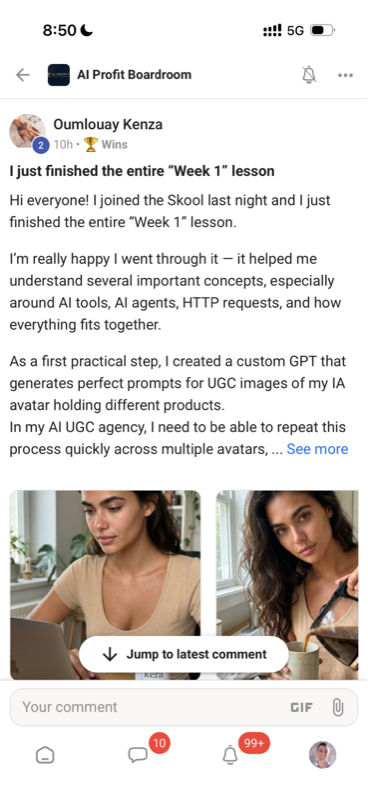
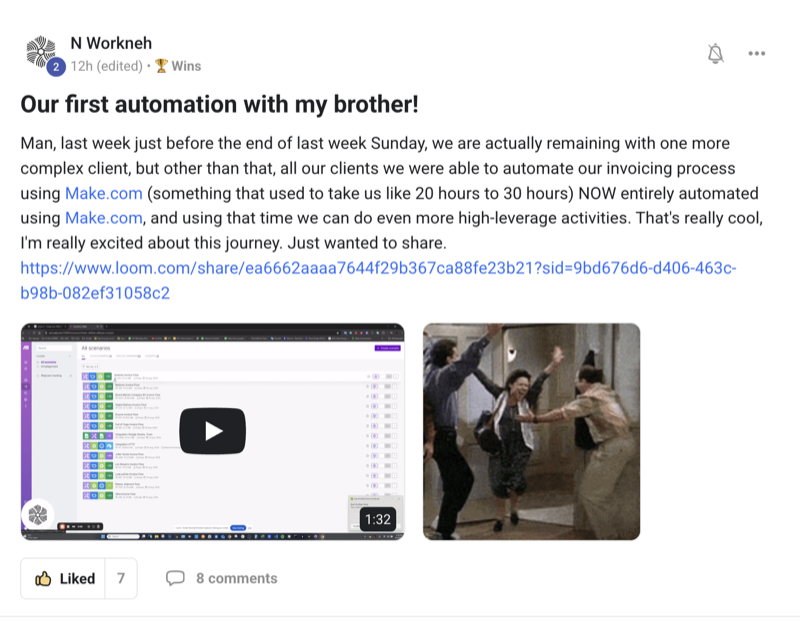
If that's you, learn AI SEO yourself inside the AI Profit Boardroom, where the trainings walk through each task.
A store with hundreds of products, a locked theme or no time is usually better off with a team, and you can book a free SEO strategy session to see what that would cover.
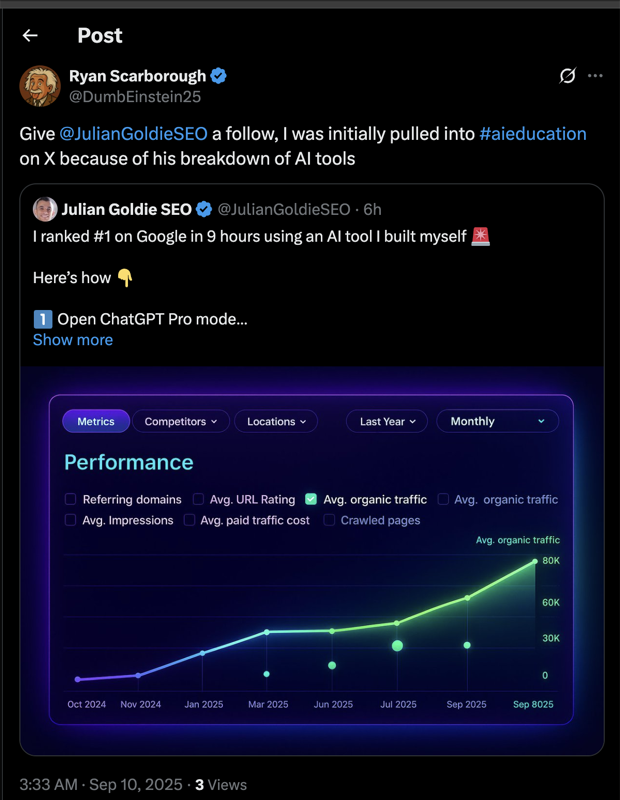
Goldie Agency covers SEO, GEO, AEO and link building, and Julian's own published numbers show 1,000+ SEO and link building campaigns and 240+ clients.
For a related read on getting listed in ChatGPT, see how to get my business on ChatGPT.
How to tell if it's working
Pick your measures before the work starts.
- Impressions in Search Console's generative AI performance reports for your product URLs.
- Citations of your URLs in Bing's AI Performance report.
- Mentions and website clicks in Business Hub insights, if you claimed your store.
- Sales from AI referrals in your analytics, which in our experience usually show up as chatgpt.com for ChatGPT.
Look at trends across several months, not single weeks.
When you are ready to talk numbers for your own store, book a free SEO strategy session.
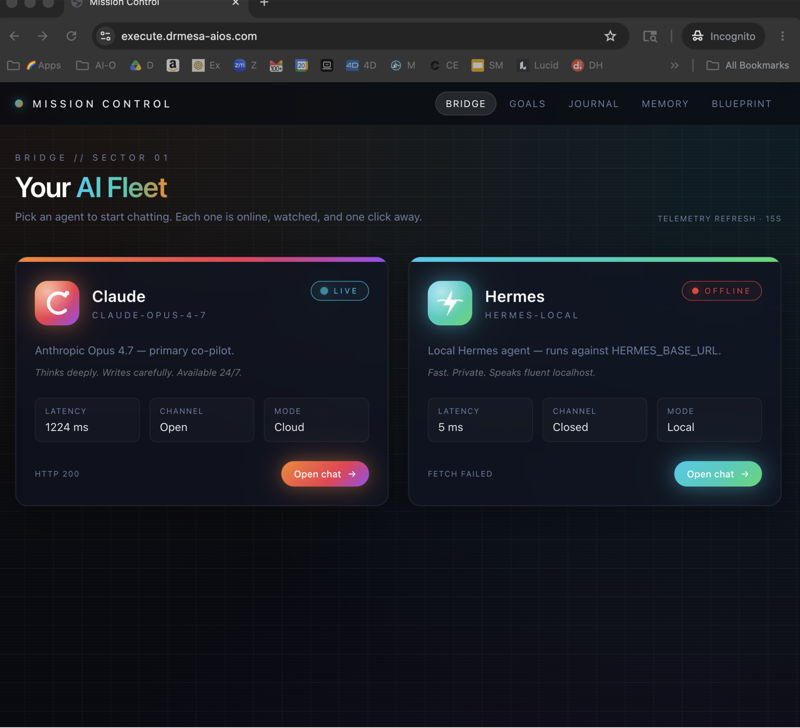
🔥 Rather learn AI SEO yourself and keep the work in-house? Inside the AI Profit Boardroom you get step-by-step video trainings, the installable Agent OS, and four live coaching calls a week to ask about your own product pages. → Join the AI Profit Boardroom
📘 Free help for small store owners Download the 200+ AI SEO Prompts for product descriptions and audits, plus the free link building book on earning links to your store. → Or book a free strategy session
Book a free SEO strategy session →
Also On Our Network
- 🌐 The nine-step store workflow, from crawler rules to product markup and feeds
- 🌐 DIY, freelancer and agency options for store AEO, scored out of 10
- 🌐 Five copy-paste agent prompts that do the groundwork for store AEO
- 🌐 Which AI models draft store product pages best, by live bench scores
FAQ: AEO For Ecommerce
Is answer engine optimization worth it for a small online shop?
It is worth it when your products raise questions buyers ask before purchase and your pages are already indexed. If basic SEO setup isn't done, do that first.
Can someone guarantee my products appear in ChatGPT or AI Overviews?
No. Google says nobody can guarantee a #1 ranking, and OpenAI says a product feed doesn't guarantee ChatGPT recommends your products.
Which stores benefit most from AEO work?
Specialist stores with products that need explaining, such as parts, crafts, furniture or speciality food and drink, because their pages can answer questions other shops don't.
What should a store owner still handle personally?
Supplying product facts, approving page changes, asking every buyer for a review and claiming the business in ChatGPT Business Hub.
What is the biggest risk when hiring for this?
Shortcuts: mass-produced pages, fake or paid reviews, or myths like llms.txt sold as a Google fix. Ask for the official sources behind each recommendation.
📺 Video notes + links to the tools 👉
🎥 Learn how I make these videos 👉
🆓 Get a FREE AI Course + Community + 1,000 AI Agents 👉
About Julian
I'm Julian Goldie, an SEO entrepreneur, author and founder of the AI Profit Boardroom, which has 3,400+ members.
I help business owners scale with AI agents, automation and SEO.
- I've built a 7-figure SEO and link building agency, Goldie Agency, with a team of 70+ SEO experts.
- I've grown a YouTube channel to 400,000+ subscribers.
- I wrote "Link Building Mastery".
- My Udemy courses have taught over 29,000 students.
→ Get my best AI training inside the AI Profit Boardroom
If your products raise questions and your basics are in place, the work pays its way in clearer pages and better data, so book a free SEO strategy session and decide on AEO for ecommerce with real evidence.