AI automation for small business works best when you hand AI the boring, repetitive jobs first, like sorting enquiries, drafting follow-ups and writing weekly reports.
You don't need to rebuild your whole company around AI.
You need to find the seven or so jobs that eat your week, and let AI take the first pass at them while you stay in control.
That's exactly what this post covers.
I'll show you the seven jobs I'd automate first, the guardrails that stop AI from embarrassing you, and the order I'd roll it out in.
If you're a business owner who keeps hearing "you need AI" but has no idea where to start, this is for you.
🔥 Want the automation workflows I use in my own business? Inside the AI Profit Boardroom, there's a library of AI automation workflows, step-by-step tutorials and weekly coaching calls where you can show me your setup and get help. You'll be alongside 3,400+ members automating real businesses. → Get access here
The Short Answer: What AI Automation For Small Business Looks Like
Here are the seven jobs I'd hand to AI first, in roughly the order I'd tackle them.
| # | Job to hand off | What the AI does | What you still do |
|---|---|---|---|
| 1 | Inbound lead triage | Sorts and qualifies new enquiries, then drafts a tailored reply. | Approve replies and take the sales calls. |
| 2 | Lead follow-up and CRM updates | Drafts follow-ups and keeps your CRM up to date. | Check the tone and handle anything unusual. |
| 3 | Weekly numbers report | Pulls the data, builds charts and writes a short summary. | Read it and make the decisions. |
| 4 | Content creation | Researches topics and drafts blog posts and social content. | Edit, add your experience and publish. |
| 5 | Customer questions and DMs | Answers common questions in your voice. | Handle complaints and tricky cases. |
| 6 | Feedback routing | Collects feedback from different channels and sends it to the right person. | Act on what matters. |
| 7 | Goal-to-task planning | Turns a goal into scheduled daily tasks and tracks progress. | Set the goal and review the plan. |
Notice that every row keeps a human in the loop.
That's deliberate, and it's the single most important rule in this whole post.
Why Most Small Businesses Get AI Automation Wrong
Most owners make one of two mistakes with AI.
The first mistake is doing nothing, because it all feels too technical and too risky.
The second mistake is trying to automate everything at once with some huge, complicated system.
Both mistakes leave you exactly where you started.
The owners who get real value from AI automation start small, with one job, and expand once that job runs smoothly.
I want to shift one belief for you right now.
AI automation isn't about replacing your business with robots.
It's about getting the boring first draft of your week done before you've had your morning coffee.
How To Tell Which Jobs Are Ready For AI
Before we go through the seven jobs, here's the test I use for any task.
I ask whether the job is repetitive, meaning it happens daily or weekly.
I ask whether it follows rules that I could explain to a new starter in a few minutes.
I ask whether a mistake would be low risk and easy to catch.
If a task ticks all three boxes, it's a strong candidate for AI automation.
If a task involves big money, legal issues or upset customers, I keep a human firmly in charge.
Job 1: Let AI Triage Your Inbound Leads
Every small business owner I know has the same problem with enquiries.
Leads come in through the website, email and social media, and some of them sit for days before anyone replies.
An AI agent can read every new enquiry, work out whether it's a good fit and draft a tailored reply.
OpenAI even lists lead triage as a recommended use case for its ChatGPT workspace agents, which you can see me walk through in the video above.
You stay in control by approving the reply before it goes out.
This alone can stop good leads from going cold while you're busy doing the actual work.
Job 2: Let AI Handle Follow-Ups And CRM Updates
Most sales are lost in the follow-up, not the first conversation.
People mean to follow up, and then life gets in the way.
An AI agent can draft follow-up messages based on what the lead said and update your CRM so nothing slips through the cracks.
Workspace agents can connect to tools like HubSpot, Gmail, Google Drive and Notion, which covers what a lot of small businesses already use.
I'd keep a human approving these messages at first, then loosen the reins once you trust the drafts.
Job 3: Let AI Write Your Weekly Numbers Report
Most owners know they should review their numbers every week.
Most owners also skip it, because pulling the data together is tedious.
This is a perfect job for AI automation.
An agent can pull your data on a Friday, build simple charts, write a short summary and drop the report in your inbox.
You then spend ten minutes reading it instead of an hour building it.
It sounds small, but a business that looks at its numbers every week makes better decisions than one that guesses.
Job 4: Let AI Draft Your Content
Content is one of the best uses of AI for a small business, as long as you do it properly.
I've shown an AI agent that researches the latest news in a niche every day and drafts an SEO blog post from it.
You can set that up to run on a daily schedule, so a fresh draft is waiting for you each morning.
The key word there is draft.
AI content still needs a human to edit it, add real experience and remove anything generic.
Your experience is what makes content rank and convert, and AI can't invent that for you.
Here's a beginner-friendly look at Claude Cowork, which is another way to hand off this kind of work without writing code.
🚀 Want the content automation templates? The AI Profit Boardroom has ready-made AI content workflows and prompts, so you don't have to build them from scratch. → Join the AI Profit Boardroom
Job 5: Let AI Answer Common Customer Questions
If your inbox is full of the same ten questions, AI can answer most of them for you.
That might be opening hours, prices, delivery times or how to book.
A coaching business, for example, can use an AI agent to handle DMs and reply in a natural, friendly way.
I'd still make sure complaints, refunds and anything emotional go straight to a human.
Customers forgive a slow reply far more easily than a robotic one at the wrong moment.
Job 6: Let AI Route Customer Feedback
Feedback arrives everywhere, from support emails and reviews to Slack messages and social comments.
Most of it never reaches the person who could actually do something about it.
An AI agent can collect that feedback, group similar comments together and send them to the right person.
This is another use case OpenAI highlights for workspace agents, and it's a quiet win that improves your product over time.
Job 7: Let AI Turn Goals Into Daily Tasks
This one is a little more advanced, but it's powerful.
You give an AI agent a goal, like "get more reviews this quarter", and it breaks that goal into scheduled tasks.
Then it works towards that goal every day and reports back on progress.
Think of it as a growth assistant that never forgets what you said you'd do.
I wouldn't start here, but once the first six jobs are running, this is a great next step.
The Guardrails That Keep AI Automation Safe
I love AI, but I'd never let it run loose in a business without guardrails.
Here are the four I'd insist on from day one.
The first guardrail is an approval gate. The agent has to ask a human before it sends, posts or changes anything important.
The second guardrail is limited access. Each agent only gets access to the tools it genuinely needs for its one job.
The third guardrail is activity logs. You should be able to see exactly what every agent did and when it did it.
The fourth guardrail is starting simple. You launch one low-risk agent, watch it for a couple of weeks and only then add the next one.
Business tools like ChatGPT workspace agents include admin controls, approval steps and audit logs for exactly this reason.
If a tool doesn't let you see what your AI did, I wouldn't trust it with customer-facing work.
The Tools Small Businesses Actually Use For AI Automation
You don't need a huge tech stack to get started.
| Tool type | Example | Good for |
|---|---|---|
| Business AI agents | ChatGPT workspace agents | Scheduled agents that work across your apps, built by describing the job in plain English. |
| AI assistant for desk work | Claude Cowork | Handing off research, documents and admin tasks without code. |
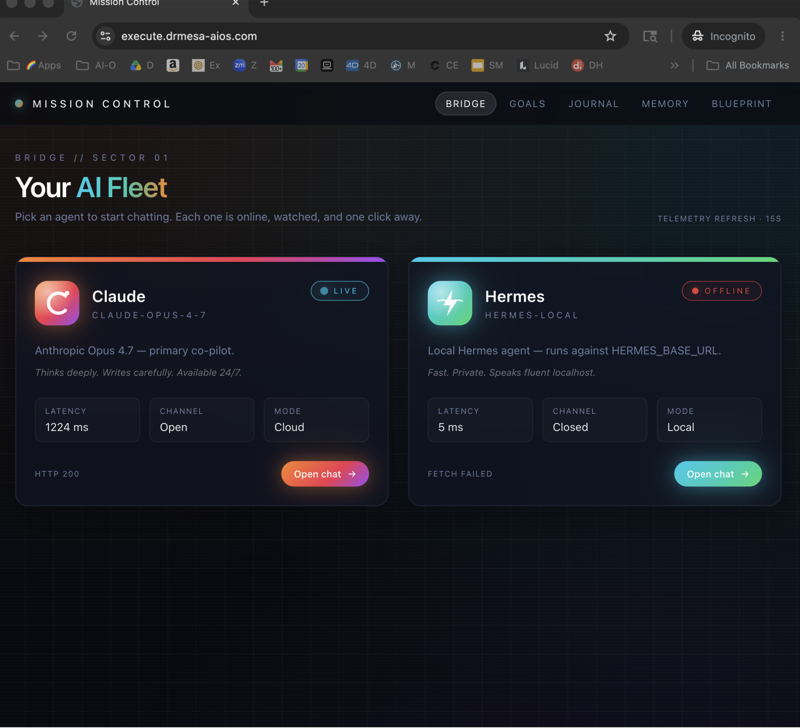
| Open-source agent systems | Hermes Agent and Agent OS setups | Owners who want more control and are happy to tinker. |
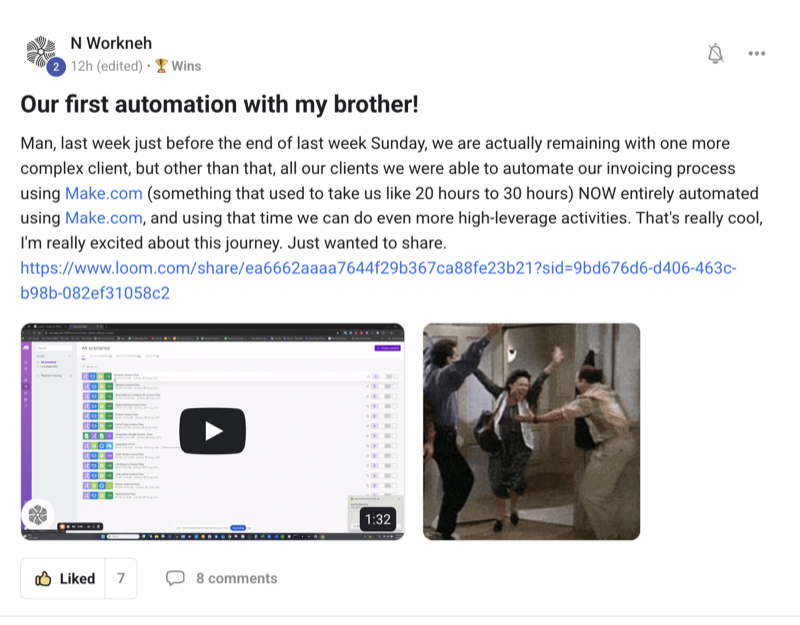
| No-code connectors | n8n or Make | Connecting your existing apps so data moves automatically. |
I'm not a coder, and I've still built my own AI assistant on top of the open-source Hermes Agent, with a voice from ElevenLabs and Claude helping in the background.
I'm telling you that so you know the barrier is lower than it looks, not so you go and build the same thing on day one.
If you're curious about running a whole team of agents from one dashboard, here's my walkthrough of the free Agent OS.
Should You Do AI Automation Yourself Or Hire Someone?
Both options can work, so here's how I'd decide.
| Do it yourself if... | Hire help if... |
|---|---|
| You enjoy learning new tools. | You'd rather spend your time on customers. |
| You have a few hours a week to experiment. | Your week is already full. |
| Your workflows are fairly simple. | Your workflows touch lots of systems. |
| You want to understand exactly how it works. | You just want it working. |
If you decide to hire, look for someone who starts with your business problems rather than a list of fancy tools.
And if you're on the other side of this and want to sell AI automation to business owners, read how to start an AI agency.
Building simple automations for small businesses also features in my list of AI side hustles worth starting.
🔥 Want help growing your business with AI and SEO? If you'd like an expert eye on your growth plan, you can book a free strategy session with my agency. → Book your free strategy session
My 4-Week Rollout Plan For AI Automation
Here's how I'd roll AI automation into a small business without breaking anything.
In week one, I'd list every repetitive task and score it against the three-question test. The top three tasks become my shortlist.
In week two, I'd automate the single safest task with a human approval step. Lead triage or the weekly report are great first choices.
In week three, I'd watch the results closely and fix anything that feels off. I'd tweak the instructions rather than giving up on the idea.
In week four, I'd add the second task from my shortlist. By then, I'd have a feel for what AI does well in my business and where it needs help.
I'd keep adding one job at a time rather than rushing to automate everything.
Related Reading
- How to start an AI agency with my 6-step playbook is useful if you want to turn these skills into a service.
- 12 AI side hustles I'd actually start in 2026 includes small business automation as one of the options.
My Verdict On AI Automation For Small Business
AI automation is one of the most practical upgrades a small business can make right now.
The trick is to start with boring, repetitive, low-risk jobs and keep a human in the loop.
Lead triage, follow-ups, weekly reports and content drafts are where I'd start.
Add guardrails, roll it out one job at a time, and judge it by the hours it hands back to you.
FAQ: AI Automation For Small Business
What should a small business automate with AI first?
Start with repetitive, low-risk jobs that follow clear rules, such as sorting inbound enquiries, drafting follow-up emails, writing weekly reports and answering common customer questions.
Keep a human approval step on anything customer-facing.
Do I need to code to use AI automation in my small business?
No, you don't need to code.
Tools like ChatGPT workspace agents let you describe the job you want done in plain English, and the tool builds the agent for you.
No-code tools like n8n and Make can connect your apps without programming.
Is AI automation safe for small businesses?
It can be, as long as you add guardrails.
Use approval gates so the AI asks before acting, limit which tools each agent can access, check the activity logs and never let AI send anything sensitive without a human review.
Will AI automation replace my staff?
In most small businesses, AI automation takes the repetitive first draft off your team's plate rather than replacing people.
Your team then spends more time on customers, quality and decisions that need human judgement.
How much does AI automation cost for a small business?
Costs vary by tool and plan.
Many owners start with tools they already pay for, such as a ChatGPT or Claude subscription, and only add paid automation tools once a workflow has proven it saves real time.
📺 Video notes + links to the tools 👉
🎥 Learn how I make these videos 👉
🆓 Get a FREE AI Course + Community + 1,000 AI Agents 👉
Also From Julian
- I share more practical AI business training on the AI Profit Boardroom blog.
- If you want to go deeper on running agents, my Agent OS guides at agentos.guide walk through real setups step by step.
- To see which AI models perform best before you build on them, check the GoldieBench leaderboard.
About Julian
I'm Julian Goldie, an SEO entrepreneur, author and founder of the AI Profit Boardroom, which has 3,400+ members.
I help business owners scale with AI agents, automation and SEO.
- I've built a 7-figure agency, Goldie Agency, with a team of around 50 people.
- I've grown a YouTube channel to 400,000+ subscribers.
- I wrote the Amazon best-sellers "SEO Link Building Mastery" and "Agency Marketing Mastery".
- My Udemy courses have taught over 50,000 students.
→ Get my best AI training inside the AI Profit Boardroom
Start with one boring job this week, because that's how AI automation for small business actually pays off.