ChatGPT Dots vs Muse is a money question before it is a tech question, because an agent that runs 24/7 is either saving you hours or burning your subscription.
So here is my verdict for business owners.
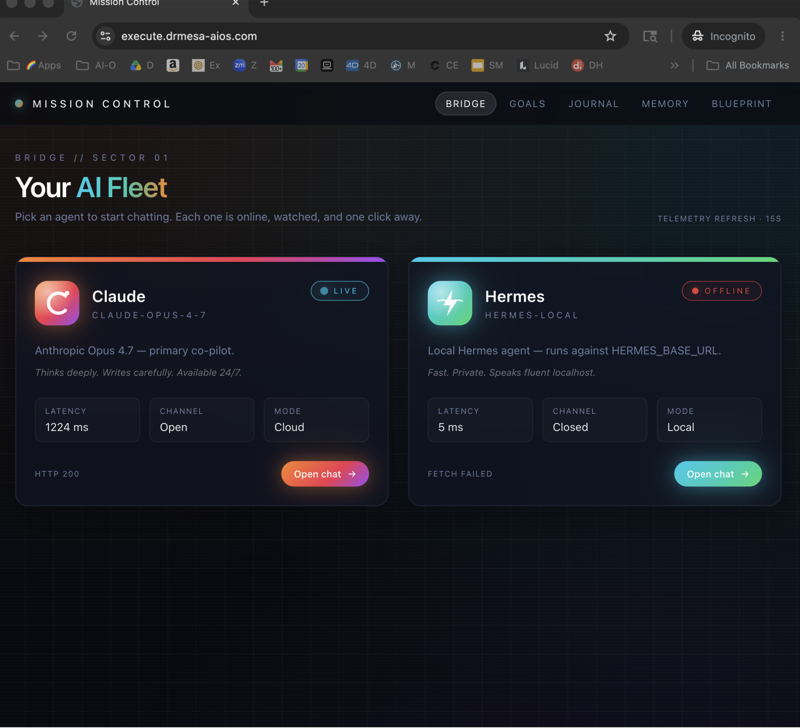
ChatGPT Dots is the agent I would pay for to run client work and an agency, because it plugs into Slack, Teams, GitHub and Google apps and lets you set firm rules on what it does alone.
Meta Muse is the cheaper bet for a US small business that sells on Shopify and advertises on Instagram, because it starts free and connects to the tools those businesses already use.
Neither one is a magic money button.
The money comes from what you point it at, and from charging clients for the setup most people cannot be bothered to do.
That is what this post is about.
My Money Verdict On ChatGPT Dots vs Muse
Here is the decision in one table, written for someone who cares about return rather than features.
| Money question | ChatGPT Dots | Meta Muse |
|---|---|---|
| Cheapest way in | Included with ChatGPT Pro or Business Premium | Free tier |
| Paid upgrade | Higher ChatGPT plans | Plans reported at $20 and $100 a month |
| Best business type | Agencies, freelancers, dev shops and teams | US and Canadian small businesses and creators |
| Where clients reach it | Slack and Microsoft Teams | WhatsApp and the Muse app |
| Business tools | Plugins including Gmail, Google Drive and GitHub | 20+ tools including Shopify, Stripe, QuickBooks and Klaviyo |
| Spending control | Mark money actions as hand off to you | Nothing spends without your approval |
| Region limit | Pro excludes the UK, EEA and Switzerland | US only, with small business in the US and Canada |
| Model | GPT-6 Astra | Muse Spark |
If you run client work, my pick is Dots.
If you run a small online shop in the US, my pick is Muse.
What Each Agent Actually Costs You
Let's talk about the real cost, because that decides whether an agent pays for itself.
Your first dot comes with ChatGPT Pro or Business Premium at no extra cost.
ChatGPT Learn lists Pro 100, Pro 200 and Pro 500 as the eligible Pro plans.
OpenAI says chatting with your dot does not count against your ChatGPT limits, and launch users got extended limits for the first month.
The hidden cost is that tasks your dot creates in Work or Codex count toward those products' own limits.
So a dot that writes lots of code can still eat into your Codex allowance.
Muse starts free, and Meta says the free tier covers most of what people need.
Press reports name the paid plans Power at $20 a month and Maximum at $100 a month.
Meta's own explanation, according to coverage, is that the paid tiers exist to cover compute for heavy users.
The catch is that Meta has not published the usage limits on any tier, so you cannot yet work out exactly how far the free tier stretches.
For a business owner, that means Muse is the cheaper experiment, and Dots is the more predictable tool if you already pay for ChatGPT.
Money Play 1: Run Client Work Through ChatGPT Dots
This is where I see the clearest return for agencies and freelancers.
A dot works on its own cloud computer, so it keeps going when your laptop is shut.
You can message it in Slack or Microsoft Teams, and it can watch a channel if you set that up on purpose.
That means it can sit where your client conversations already happen.
OpenAI's own examples show the shape of the work.
One is a developer whose dot watches customer feedback, builds and tests small fixes, and brings back finished pull requests.
Another is a sales lead whose dot checks requirements against docs, builds a proof of concept and keeps a proposal up to date.
A third is a content creator whose dot finds clip moments in a new interview, writes show notes and drafts social posts for approval.
The example I like most for money is from an early tester.
His dot noticed he had forgotten to invoice a publication, prepared the invoice and sent it after he approved it.
That is the kind of leak every agency owner has, and an agent that catches it pays for itself fast.
I set up my own dot on 30 September 2026, and the lesson I took from building my guide was simple.
A dot is only as useful as the brief you give it, with a clear goal, the right apps and firm rules.
Money Play 2: Run A Small Shop Through Muse For Small Business
This is the play where Meta has a real edge.
Meta announced Muse for Small Business on 29 September 2026 for the US and Canada.
It connects to more than 20 business tools.
On the Meta side, that covers Instagram professional accounts, Facebook Pages and Meta ad accounts.
On the commerce side, it covers Shopify, Stripe, Intuit QuickBooks and Klaviyo.
It also connects to Asana, Notion, Slack, Zoom, Canva, Figma, Lovable, Dropbox, Box, HighLevel and Granola, with custom connectors for anything missing.
Meta's pitch is that you can give Muse goals like running your business or finding new customers.
One concrete example Meta gives is flagging emails that need a response and writing your first drafts.
For a shop owner who already lives in Instagram and Shopify, that is a lot of joined-up admin for a tool that starts free.
The rule Meta states is that nothing publishes, sends or spends without your approval.
I have not run Muse myself, because it is not open outside the US and Canada, so treat this as what Meta says it does rather than what I have proven.
The same pattern showed up when I walked beginners through Claude Cowork.
The tool that saves money is the one sitting inside the apps your business already runs on.
🔥 Want agents that run your business tasks while you sleep? Inside the AI Profit Boardroom, I show you the Agent OS I use to run agents 24/7, ready-made briefs for content, SEO, sales and support, and weekly coaching calls with 3,400+ business owners. → Get access here
Money Play 3: Sell The Setup, Not The Agent
Here is the play I think most people will miss.
Both agents look easy in the launch video, but neither is useful until someone connects the right apps, writes the rules and hands it a clear first job.
Most business owners will not do that themselves.
That gap is a service you can sell.
For a Dots client, the job is connecting their Slack or Teams, picking the plugins the first task needs, and setting each action to run alone, run if pre-approved, ask first or hand off.
For a Muse client, the job is connecting their Shopify, Instagram and ad accounts, setting approval levels and writing the first goals.
If you already run an agency, this slots in as a new line of work.
My guide on how to start an AI agency walks through picking one service and landing pilot clients, and it applies directly here.
If your clients are local businesses, my post on AI automation for small business shows the jobs those owners actually want handed off.
Just check two things before you sell anything.
First, check the client is on an eligible plan, because Plus and Free ChatGPT users cannot use dots.
Second, check the client's country, because Pro dots are blocked in the UK, the EEA and Switzerland, and Muse is US-only for consumers.
The Money Risks Nobody Mentions
An agent that can act on your behalf can also cost you money if you set it up badly.
Here are the risks I would plan for.
Spending risk is real with Muse, because it can book, buy and negotiate for you.
Meta says it asks before purchases, uses Link by Stripe, and does not see your payment details, with reports of single-use card numbers.
Client trust risk is real with Dots, because it can post in team channels.
Set anything client-facing to "ask before taking action" until you have watched it work.
Platform risk applies to both.
You are renting someone else's agent, and plans, prices and regions can change without warning.
Audit risk is worth noting with Muse, because coverage points out Meta has not published independent audit results for its security yet.
None of these are reasons to avoid the tools.
They are reasons to start with low-stakes jobs and earn trust before you hand over the money tasks.
Which One I Would Pay For
If I had to put money on one today for my own business, I would put it on ChatGPT Dots.
It has GPT-6 Astra behind it, it lives in the team tools agencies already use, and its rules let me lock money actions behind my approval.
If I ran a US shop on Shopify and Instagram, I would start with Muse instead, because the free tier and the Meta connectors make it a cheap test.
If you are deciding between Muse and the other new personal agent people keep asking about, read my Muse vs Instinct comparison.
And if you want help working out which agent fits your business, you can book a free strategy session with my team.
🚀 Want the agent stack I actually run my business on? Inside the AI Profit Boardroom, you get the Agent OS, step-by-step videos on selling AI services, and live calls where 3,400+ members share which agents are making them money. → Join the Boardroom here
My Final Take
ChatGPT Dots is the agent that earns its keep for agencies, freelancers and teams.
Meta Muse is the cheap, fast test for US and Canadian small businesses already living inside Meta's apps.
The biggest money in both is the setup work, because every business wants an always-on agent and very few want to configure one.
That is my money verdict on ChatGPT Dots vs Muse.
Related Reading
- Muse vs Instinct: which personal agent is worth it
- How to start an AI agency in 6 steps
- AI automation for small business
📺 Video notes + links to the tools 👉
🎥 Learn how I make these videos 👉
🆓 Get a FREE AI Course + Community + 1,000 AI Agents 👉
Also On Our Network
- 🌐 The full ChatGPT Dots vs Muse verdict, round by round
- 🌐 The operator setup guide for both agents
- 🌐 Running Dots and Muse inside an Agent OS
- 🌐 The live AI model leaderboard I use to pick models
FAQ: ChatGPT Dots vs Muse For Business
Is ChatGPT Dots or Muse better for a business?
For agencies, freelancers and teams, ChatGPT Dots is the stronger pick because it works in Slack, Teams, GitHub and Google apps with four levels of custom rules.
For a US or Canadian small business running Shopify, Instagram and Meta ads, Muse for Small Business is the cheaper starting point because Muse has a free tier and connects to more than 20 business tools.
What does ChatGPT Dots cost a business?
Your first dot is included with ChatGPT Pro or Business Premium at no extra cost, and Enterprise, Edu and Healthcare workspaces get it in beta when an admin enables it.
Chatting with your dot does not count against your ChatGPT limits, but tasks created in Work or Codex count toward those products' limits.
What does Meta Muse cost?
Meta says Muse is free for most of what people need, with subscription plans for heavier use.
Press reports name those plans Power at $20 a month and Maximum at $100 a month.
Meta has not published the usage limits for each tier.
Can I sell ChatGPT Dots or Muse setup as a service?
Yes, the setup work is where the service sits.
Both agents need connected apps, approval rules and a clear first brief before they are useful, and most business owners will not do that themselves.
Check that your client is on an eligible plan and in a supported country first.
Will ChatGPT Dots or Muse spend money without asking?
Not if you set them up properly.
Dots lets you mark money-related actions as "hand off to you", and Muse asks before sensitive actions like making a purchase.
Muse for Small Business says nothing publishes, sends or spends without your approval.
About Julian
I'm Julian Goldie, an AI entrepreneur, SEO expert, and founder of the AI Profit Boardroom, which has 3,400+ members.
I help business owners scale with AI agents, automation, and SEO.
- I have 400,000+ YouTube subscribers who watch my AI tool tests every week.
- I built a 7-figure agency from the ground up.
- I run daily AI training inside the Boardroom.
- I wrote two Amazon best-sellers on SEO and agency growth.