Herald OS is a free, open-source operating system that puts Hermes Agent at the centre of your computer, so you run your work by talking or typing to one agent.
It was built by an independent developer, Luke The Dev, and it runs on the Hermes Agent you may already use.
When I tested it on camera, the question in my head wasn't "is this pretty?"
The question was "how would a business owner, an agency or a creator actually use this every day?"
So this post explains what Herald OS is first, then walks through nine real ways I'd use it, built only from the features I tested.
I won't promise you it'll make you money, because no interface does that on its own.
What it can do is take repeatable work off your plate, and that's where the value sits.
What Herald OS Is, And What It Costs
Herald OS calls itself "an agent-native operating system, with Hermes Agent as the interface".
On a Mac, it runs full screen over macOS, and on a PC it can be its own Linux-based operating system.
Hermes sits in the middle and can open apps, organise files, remember things, run routines and build software, with a permission system for anything that changes something.
| Question | Straight answer |
|---|---|
| Who built Herald OS? | Luke The Dev built it as an independent project that isn't affiliated with Nous Research. |
| What does it cost? | Herald OS is free and MIT-licensed. |
| What can cost money? | The model Hermes uses can cost money, unless you choose a free model. |
| How mature is it? | It's an alpha, version 0.1, and the repo went up on 6 October 2026. |
| What do you need? | You need Hermes Agent, a model provider, and an Apple Silicon Mac or a supported Linux setup. |
The old way of running Hermes was the terminal, which is how I used it around March and April 2026.
It worked, but it was messy, and most business owners I showed it to switched off.
Herald OS is the new way, because it's a clean interface over the same agent.
I actually think it looks nicer than Hermes Desktop.
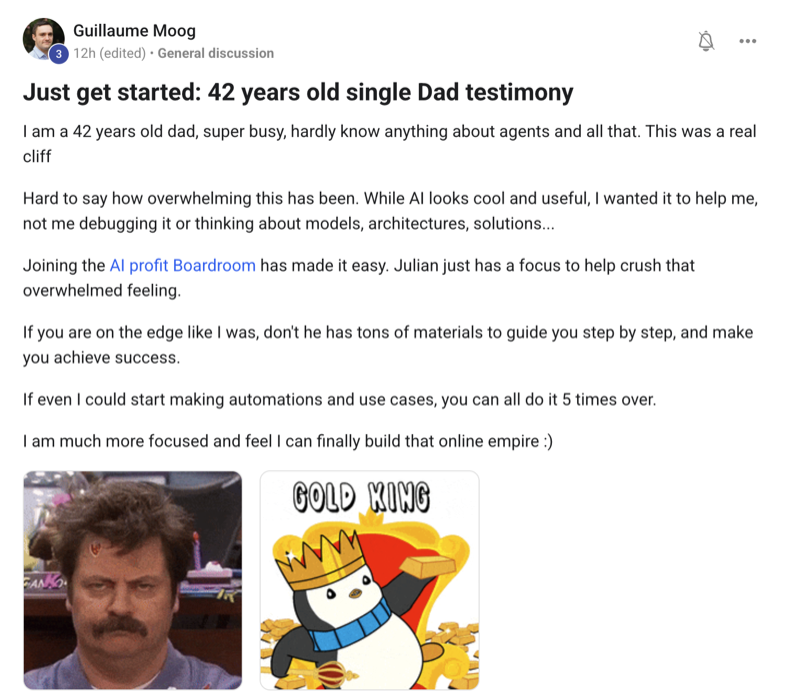
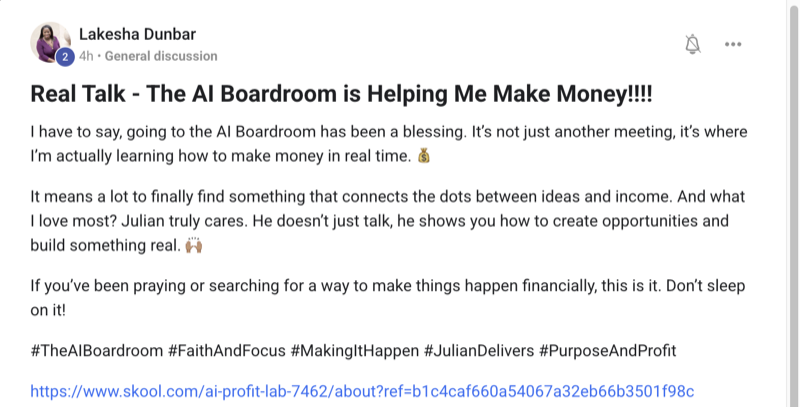
🔥 Want my exact Herald OS setup, step by step? Inside the AI Profit Boardroom you get step-by-step video trainings, my installable Agent OS and four coaching calls a week with 3,400+ members building real automations. → Join the AI Profit Boardroom
How To Get Herald OS Running
On a Mac, the route is short.
First, install Hermes Agent with the official install script and run hermes setup to pick a model.
Second, download the Herald OS DMG from the GitHub releases page and drag it into Applications.
Third, run the one xattr command the README gives you, because the Mac build isn't notarized by Apple yet.
I had Claude do the whole setup for me, and it took about two minutes.
If you want every install route, including Linux, Arch, Omarchy and the virtual machine, I've put them all in my Herald OS GitHub install guide.
Use Case 1: One Space For Each Client Or Company
This is the most common question I get inside the AI Profit Boardroom.
Someone says, "I run separate companies and clients, so how should I set up my agent OS?"
Herald OS answers it with Spaces.
It ships with Ideas, Work and Personal, and you can add a new space for each client.
You can also set a default space, so it opens on the business you spend most time in.
For an agency, that means client work stays in its own lane instead of piling up in one long chat history.
Use Case 2: A Morning Briefing That Builds Itself
The dashboard greeted me with "Good morning, Julian. Your day already in motion."
It shows today's schedule from your scheduled tasks, plus a "here's what needs attention" panel.
Then there's "Pick up where you left off".
Hermes looks at the names of your recent documents, projects, chats and calendar events and suggests where to continue.
It's off until you turn it on, it reads names and dates rather than file contents, and the README says it shows up to three threads.
If you switch between clients all day, this is the feature that saves you from five minutes of "where was I?" every time.
It even surfaced my recent desktop screenshots, which is handy when you're mid-task.
Use Case 3: Automations That Run Your Routine
The Automations page is where Herald OS starts doing your recurring work.
These are the three I had running.
- A daily 6am to-do recap tells me what matters before I open my inbox.
- A daily Japanese learning session keeps a personal habit on track.
- An inbox triage job sends me a morning inbox summary.
You can switch each automation on or off, run one now, or duplicate it for another client.
The key point for a business is that the automations synced across Herald OS, Hermes Desktop and my Agent OS.
That's because all three run on the same Hermes underneath.
So if your team uses different interfaces, the routines don't need rebuilding.
The manual also lists event triggers, such as running something when you log in or come back after a break.
Use Case 4: Missions For Bigger Client Jobs
A normal chat is fine for a question, but it's weak for a project.
Missions are built for projects, and the page says "From intent to finished work".
You type what Hermes should accomplish, and it plans the work step by step.
My example on camera was "build out a new website".
Each mission keeps a plan, a preview of the files Hermes writes, and an activity timeline you can check.
That's the right shape for client deliverables, because you can see progress instead of guessing.
Use Case 5: Watch Hermes Build The Thing
The repo docs describe a feature called Studio.
You say something like "build a website for a hair salon", and it opens one window with the project files, the code as it's written, the commands it runs and a live preview.
For an agency owner, that's a strong way to show a client what an agent is doing.
Keep reviewing what it builds, though, because it's still an alpha.
🔥 Want to turn agent workflows like this into real client work? Inside the AI Profit Boardroom, I share my Hermes trainings, automation blueprints and the Agent OS I use, with four coaching calls a week and 3,400+ members building alongside you. → Get access here
Use Case 6: A Memory That Knows Your Business
The Memory page shows everything Hermes remembers about you.
You can search it, add a memory yourself, or tell it to forget something.
For a business, that's where your preferences, your tone and your standing instructions live.
There's a warning that comes with it, though.
When I opened my Memory page on camera, my Telegram details were right there on screen.
So check this page before any client call, team demo or screen recording.
Use Case 7: Files And Finding Things Fast
The Files page has recent files, favourites, projects, downloads, shared and deleted.
You can search by name or describe the file you're after.
Hermes can move and rename files for you, but it asks first, and the repo says it never deletes permanently.
For anyone drowning in client folders, that's a calmer way to keep things tidy.
Use Case 8: Keep An Eye On Model Costs
Herald OS is free, but your model isn't always free.
The Usage settings page shows what Hermes used this week and over the last 30 days, your plan and your token balance.
The README says it warns you when you hit 90% of your plan.
If you bill clients for AI work, this is the page that stops surprise invoices.
If you'd rather pay nothing for the model, my free Hermes Agent OS breakdown covers the free routes.
Use Case 9: Run It By Voice
The Voice settings let you switch the voice engine, change the speed, pick a local voice or the "live" voice, test it, and see a list of voice commands.
It feels very Jarvis-like when you use it.
The repo docs say the free engine answers in about two seconds, and the optional Live engine costs $0.05 a minute through your own OpenAI key.
Voice is optional, and the microphone stays closed unless voice is on.
The Rest Of The Settings A Business Should Know
These are the settings I walked through on camera, and they matter when you run real work.
| Setting | Why it matters for a business |
|---|---|
| Preferred model | You choose the brain, and mine showed GPT-6 Astra, which I'd plugged in through a CLI. |
| Where agents run | You choose the runtime, including Docker, so you can keep jobs contained. |
| Background agents | You set how many agents can work at the same time. |
| Remember preferences | You decide whether Hermes learns from your choices. |
| Auto-approve | You can keep "Ask before sending messages" on, which I'd do for anything client-facing. |
| Activity history | You can see background work you set up and forgot about. |
| General | You set launch fullscreen, default space, folders, do not disturb, stay awake, screensaver, dictation and quit session. |
| Themes | You change colours and themes to make it feel like your own. |
| Software | You add or remove coding agents and local models such as Claude Code, Codex and LM Studio. |
| Plugins | You paste a GitHub link to add a plugin. |
| Hermes Agent | You manage the Hermes connection itself. |
| Privacy, notifications, network, storage, accessibility | You get the audit log and the usual system controls. |
Turn on do not disturb if you work in calls, because there's a bell notification sound.
What Didn't Work, And Who Should Wait
Connections is meant to bring your tools and external apps into one place.
It didn't connect or sync for me, which is the reality of a brand-new open-source alpha.
You could ask Claude to fix it, but I wouldn't build a client workflow on it yet.
The sidebar is resizable, and the UI was cut off slightly at the top on my screen.
The Mac build also isn't notarized yet, so only download it from the official releases page.
If you need everything rock-solid today, stay on Hermes Desktop and come back in a few weeks.
Herald OS vs Hermes Desktop For A Business
| What you care about | Herald OS | Hermes Desktop |
|---|---|---|
| Client separation | It has built-in Spaces for each client or company. | You'd use separate profiles or chats. |
| Daily overview | It has a dashboard with your schedule and "pick up where you left off". | It's more chat-first. |
| Stability | It's an alpha with rough edges. | It's the steadier choice right now. |
| Shared brain | It uses the same Hermes, so automations sync. | It uses the same Hermes, so automations sync. |
You don't have to choose forever, because both sit on the same Hermes.
🔥 Want the full Hermes setup I run my business on? The AI Profit Boardroom has my Hermes courses, the Agent OS and weekly coaching calls where you can ask me how to set it up for your own clients. → Join the AI Profit Boardroom
My Verdict For Business Owners
Herald OS is super clean, it synced with my existing setup quickly, and Spaces plus Automations make it genuinely useful for client work.
It's best for people who want a beautiful interface for Hermes and don't like Hermes Desktop.
Start with one client space and one morning automation, keep approvals on, and judge it after a week.
Related Reading
- How to start an AI agency shows where tools like this fit into a real service business.
- AI automation for small business covers the routines worth automating first.
Also On Our Network
- 🌐 The step-by-step Herald OS install and settings walkthrough
- 🌐 My scored Herald OS review
- 🌐 Where Herald OS fits in an Agent OS workflow
- 🌐 Which models to run under Herald OS, by benchmark score
Herald OS FAQ For Business Owners
What is Herald OS?
Herald OS is a free, open-source operating system that uses Hermes Agent as the interface.
It was built by the independent developer Luke The Dev and runs on a standard Hermes Agent install.
Can I use Herald OS for client work?
Yes, because Spaces let you keep each client or company separate, and Missions and Automations handle the work.
It's an alpha, so keep approvals on and keep backups of anything Hermes touches.
How much does Herald OS cost a business?
Herald OS itself is free.
You pay your model provider, unless you use a free model, and the Usage page shows what you've used.
Do Herald OS automations work with Hermes Desktop?
Yes, my automations synced across Herald OS, Hermes Desktop and my Agent OS because they all run on the same Hermes.
Is Herald OS made by Nous Research?
No, Herald OS is an independent project by Luke The Dev.
It runs on Hermes Agent, which Nous Research publishes, but it isn't affiliated with Nous Research.
What should a business avoid in Herald OS right now?
Avoid relying on Connections, because they didn't sync for me.
Also check the Memory page before screen-sharing, because it can show personal details.
📺 Video notes + links to the tools 👉
🎥 Learn how I make these videos 👉
🆓 Get a FREE AI Course + Community + 1,000 AI Agents 👉
About Julian
I'm Julian Goldie, an SEO entrepreneur, author and founder of the AI Profit Boardroom, which has 3,400+ members.
I help business owners scale with AI agents, automation and SEO.
- I've built a 7-figure agency, Goldie Agency, with a team of around 50 people.
- I've grown a YouTube channel to 400,000+ subscribers.
- I wrote the Amazon best-sellers "SEO Link Building Mastery" and "Agency Marketing Mastery".
- My Udemy courses have taught over 50,000 students.
→ Get my best AI training inside the AI Profit Boardroom
Set up one client space and one automation this week, and you'll see quickly whether Herald OS earns a place in your business.